
☆♡☆♡☆
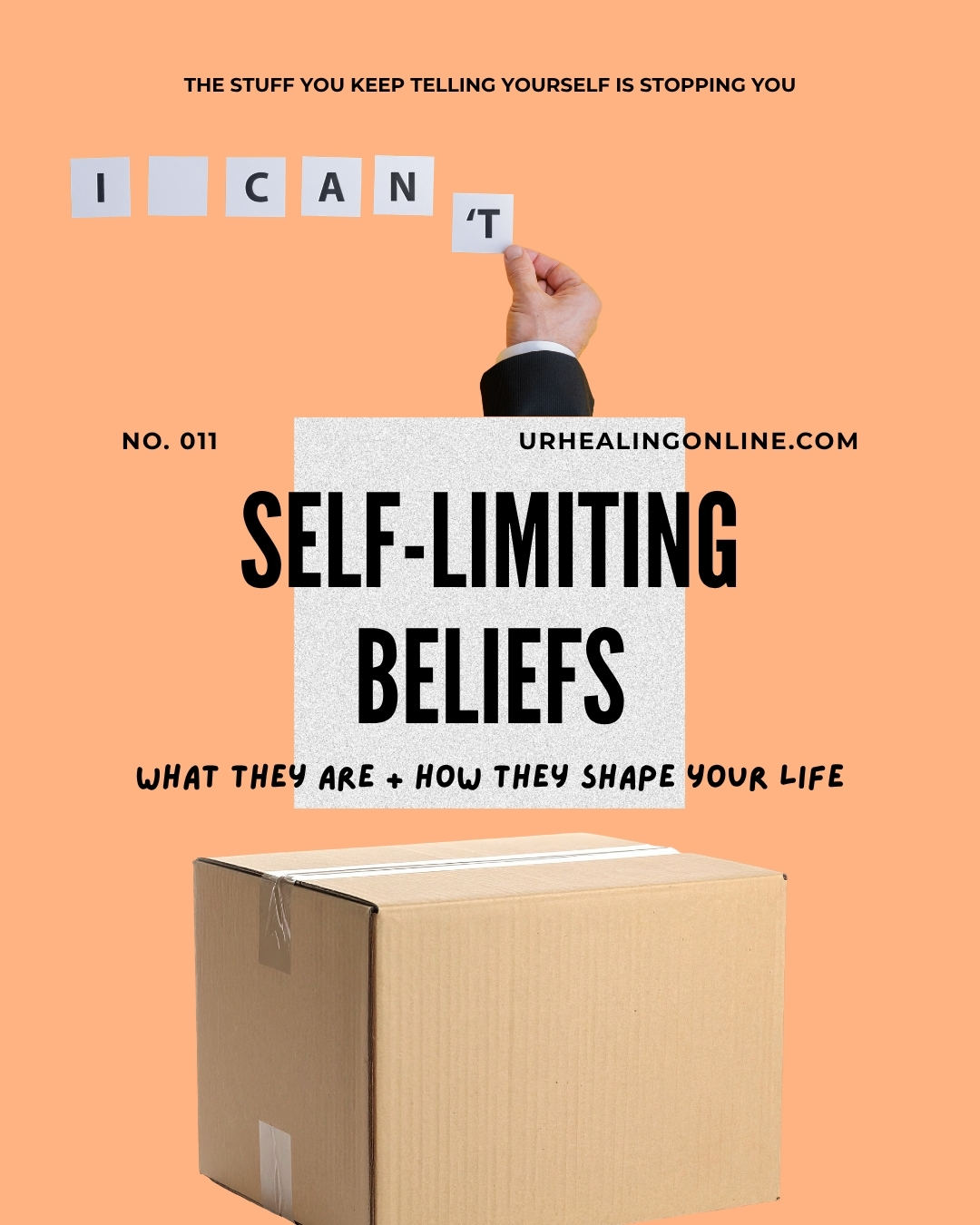
Learn how self-limiting beliefs form, how they shape your choices, clear signs to spot them, and a practical plan to change them
Self-limiting beliefs quietly narrow what you try, who you become, and how far you go. They show up as absolutes — “I can’t,” “I’m not…” — and then steer your decisions so those limits feel true. The good news: beliefs are learned, and with small, repeatable experiments you can change them. This friendly guide explains why limiting beliefs form, how they shape life outcomes, how to spot them fast, and gives a step-by-step, research-backed method (plus a 30-day plan) to replace them with empowering, practical beliefs.
What are self-limiting beliefs?
Self – limiting beliefs are internal rules you accept as truth about yourself, others, or the world that reduce your choices and willingness to act. They often sound absolute (“I always fail,” “I’m not a leader”) and can originate from early experiences, cultural messages, or cognitive biases. Once they become part of your identity, they’re especially sticky — but because they’re learned, they can be unlearned.
How limiting beliefs shape your life:
- Narrowed goals: You stop applying, stop aiming, and miss opportunities.
- Avoidance and underpreparation: Fear-driven beliefs produce procrastination or minimal effort.
- Emotional toll: Shame and anxiety create feedback loops that reinforce the belief.
- Social and career effects: They change how you negotiate, ask for support, and take risks — small choices that compound over years.
How to spot self-limiting beliefs — quick checklist
- Uses absolute language: “always,” “never,” “can’t.”
- Identity statements: “I’m not a…,” “I’m just…”
- Strong negative emotion tied to a domain (shame, fear).
- Overgeneralization from one event: “I failed once, so I always will.”
- Repeating the same avoidance or underperformance pattern.
Three quick examples
- Career pivot: “Too old” → take one evening course + land a small freelance project; the evidence weakens the old belief.
- Presentation anxiety: Start with a 2-minute talk to a friend; weekly recordings reduce fear and build skill.
- Negotiation fear: Practice small asks (schedule flexibility), record outcomes, then escalate to bigger asks.
Research that matters:
- Self-efficacy: Bandura’s work shows belief in one’s capabilities predicts effort, persistence, and achievement; higher self-efficacy leads to better performance.
- Mindset: Dweck’s research on fixed vs. growth mindsets shows viewing abilities as malleable improves persistence and learning; brief interventions can shift outcomes.
- Learned helplessness: Seligman demonstrated that perceived lack of control produces passivity; restoring perceived control reverses these effects.
- Neural plasticity: Neuroscience finds the adult brain can rewire through repeated practice, supporting lasting belief and habit change.
Step-by-step method to change limiting beliefs
- Capture the belief (awareness)
Action: Write the belief as one sentence (e.g., “I can’t speak in public”). Note when it appears and what triggers it. - Test the belief (evidence audit)
Action: Make two lists — evidence for and evidence against the belief. Force yourself to find exceptions; even small ones matter. - Reframe with alternatives (cognitive restructuring)
Action: Turn absolutes into process statements: “I’m learning public-speaking skills” or “I can prepare to speak clearly.” Create a short replacement belief to repeat daily. - Run small, measurable experiments (behavioral testing)
Action: Design 1–3 micro-challenges (e.g., a 2-minute talk to a friend, ask for one piece of feedback, apply for one role). Make success metrics simple and objective. - Use implementation intentions (If–then plans)
Action: Plan responses: “If I freeze in a meeting, then I will breathe for 30 seconds and ask one prepared question.” - Build self-efficacy with incremental wins
Action: Log small wins and gradually increase difficulty so competence grows without overwhelm. - Rewire identity (narrative work)
Action: Replace “I’m not a leader” with “I’m someone who practices leadership.” Match small daily behaviors to that identity. - Add social and environmental support
Action: Tell a friend, find a mentor, or join a group; remove cues that reinforce the limiting belief. - Maintain change (habit and review)
Action: Schedule weekly reviews of progress and monthly evidence files to keep the new belief active.
Try this plan for a month:
Week 1 — Identify & collect evidence: Pick 1–2 beliefs, write them down, complete an evidence audit.
Week 2 — Reframe & plan experiments: Craft replacement beliefs and set 3 small-challenges or tasks for them.
Week 3 — Execute & log wins: Run experiments, use if–then plans, and record results daily.
Week 4 — Review & scale: Analyze outcomes, adjust experiments, and plan next 60-day steps.
Common pitfalls (and how to avoid them)
- Expecting overnight change > use small, repeatable experiments.
- Only seeking motivation > pair reframes with concrete actions.
- Isolating the work > use social supports for feedback and accountability.
Quick Scripts
- Belief statement: “I believe _____.”
- Replacement belief: “With practice, I can _____.”
- Implementation intention: “If _____, then I will _____.”
FAQ
Q: How long does it take to change a limiting belief?
A: Small changes can appear in weeks with focused experiments; lasting identity shifts typically take months of repeated practice.
Q: Can therapy help?
A: Yes — CBT, ACT, and coaching provide structured ways to test and change beliefs faster.
Q: What if the belief comes back?
A: Treat relapses as data: run another micro-experiment, strengthen supports, and review your progress log.
References
- Albert Bandura — Self‑Efficacy: The exercise of control. (Book summary and key findings) — https://psycnet.apa.org/record/1997-36521-000
- Carol S. Dweck — Mindset: The New Psychology of Success (Research overview and interventions) — https://www.apa.org/pubs/journals/features/psp-0000186.pdf
- Martin E. P. Seligman — Learned Helplessness and Studies of Depression (Foundational experiments) — https://www.ncbi.nlm.nih.gov/pmc/articles/PMC3181831/
- Review articles on neuroplasticity and learning — (example) https://www.nature.com/articles/nrn.2015.7